What it actually does for understaffed teams, accessibility, and trust — shown live, on a real object from a real collection.
Dr. Bonnie Styles · with Adam Gurski Creative
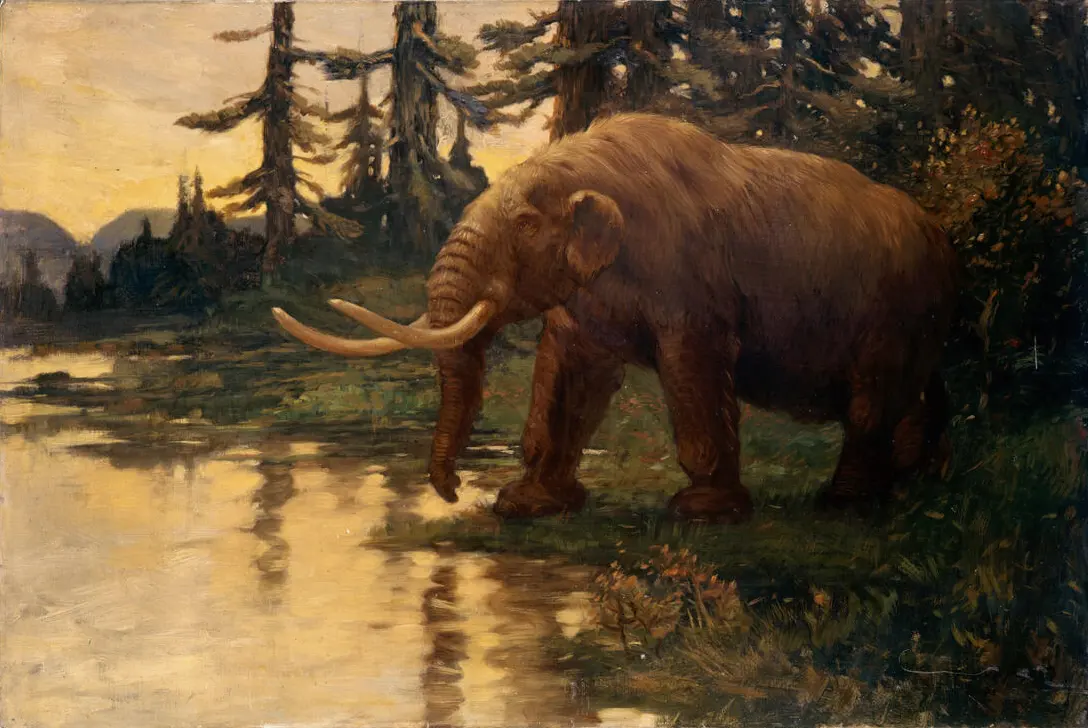
C.R. Knight, Field Museum mural · public domain
Every one of us has a backlog we'll never finish in our lifetimes.
Last month I watched one record — a mastodon molar dug up in Illinois — go from a dead database row to something a blind ten-year-old could touch and ask questions about. In under a minute.
The world we all live in
Too much to interpret. Too few people. Rising expectations.
Backlog
Millions of objects, never cataloged
Access
Accessibility mandates, no capacity
Pressure
Shrinking staff, grant deadlines
The public has already told us the rules
70%+
want zero AI in exhibition content
45%
want disclosure every time AI is used
21%
of museums even have an AI policy yet
The question was never whether — staff already use these tools. It's where: behind the scenes, humans in charge, always disclosed.
One catalog record → a publishable label, three reading levels, alt-text, a social post, and a hook — in seconds.
From one mastodon-molar record · age-7 reading level
"Wow — this is a real fossil tooth from an American mastodon! It lived a very, very long time ago. It was a small, grown-up female. People at the Illinois State Museum keep it safe so everyone can come see it and ask big questions."
AI-assisted draft · curator-reviewed · plus expert, teen, alt-text & social versions
(Offline fallback shown. Replace with a 20-sec screen recording before the talk if you prefer live.)
Not replacing curators — giving them back their Tuesday.
The math a director feels
One curator. Four thousand records.
~15 min
to interpret one object by hand
~12 sec
to a reviewable first draft
weeks
of staff time given back, per backlog
Illustrative, not magic — a human still reviews and signs every one. But the floor under the work moves.
What it buys a museum
Access
Every object, every reading level, every visitor
Advocacy
The collection, turned into the case for funding
Trust
Answers that cite their sources — or say "I don't know"
Touchable. Askable. Cited.
Live · The real ISM mastodon, in 3Ddrag to rotate · B = fallback
Interactive Specimen
The actual laser-scanned Hawthorne Farm mastodon molar from the Illinois State Museum, rotatable in any browser — no plug-in, no app. Any scanned object can become a web exhibit.
▶ Drop your recorded clip of the spinning molar here
Live · Grounded Docent — it won't make things uptry the orange (off-topic) chip
Grounded Docent
Answers only from approved, cited sources — and says "I don't know" when it's off-source. The citations are the safeguard.
Visitor: "What did the mastodon eat?"
"Mastodons were browsers, not grazers. Their low, ridged molars were built for shredding twigs, leaves, and cones from spruce woodland — that tooth shape is how we know what this animal ate."
Source: Saunders et al. 2010, Quaternary International
Visitor: "What's the weather today?" "I don't have that in my sources — I only answer from the approved documents I've been given."
(Offline fallback shown. The refusal is the point: it can't make things up.)
This isn't fringe — it's the field's framework
ASTC names 13 roles for science centers in AI
Literacy
Help the public understand AI
Public voice
Bring communities into AI decisions
Infrastructure
Strengthen systems & advocate
Meaning
Explore AI's social impact
ASTC, "Building Public Agency in AI" (2026) · Smithsonian principles: innovation · transparency · responsibility
Before anyone asks
Humans stay in charge.
🔎Grounded & cited — no invented facts; every claim sourced
✋Human-in-the-loop — staff approve everything published
🏷️Disclosed — the Smithsonian formula: format + staff role + AI role
🧭Back-of-house, not the exhibits — 70%+ of visitors want no AI in exhibition content; we honor that